

Nature rewards speed often enough that it’s easy to forget how many animals get by just fine without it. Some species have built their entire survival strategy around barely moving: conserving energy, avoiding a predator’s attention, or simply living somewhere with nothing to run from.
This list rounds up ten of the slowest animals in the world, counting down from a leisurely 5-mph flier to a sea creature that can take more than a day just to drift the length of a football field. Along the way, “slow” starts to look less like a weakness and more like a deliberate strategy that’s worked for millions of years.
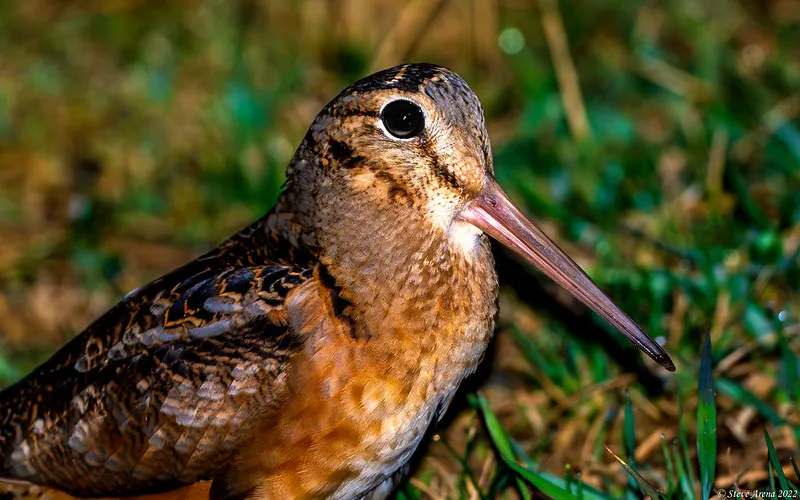
10. American Woodcock — About 5 mph in Flight
The American woodcock holds a strange honor: Guinness World Records recognizes it as the slowest-flying bird on Earth, clocking in at roughly 5 mph during its courtship display. That’s barely faster than a brisk walk, and far slower than the average pigeon or sparrow in flight.
Most birds rely on speed to escape predators or cover long migratory routes, but the woodcock leans on camouflage and short, erratic bursts instead. Its plump body and rounded wings are built for quick hops through dense underbrush, and its mottled brown feathers make it nearly invisible against fallen leaves.
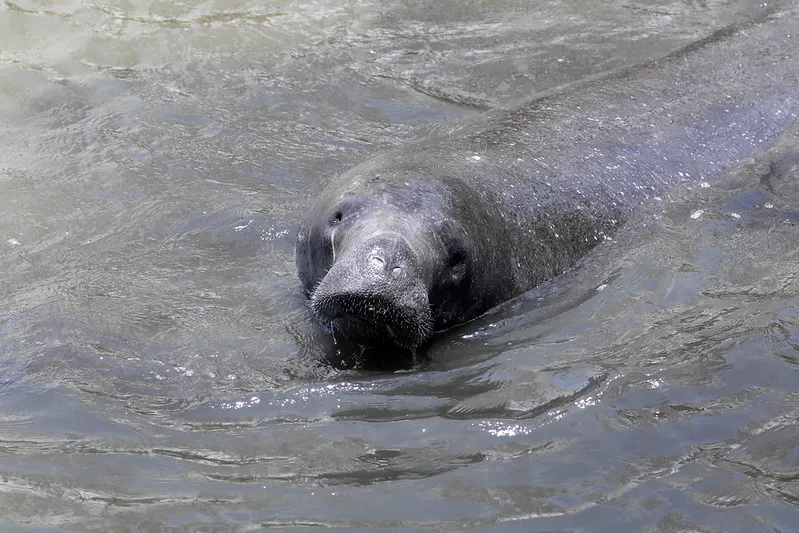
9. Manatee — About 5 mph Cruising
Manatees could easily out-swim most of the animals on this list, but their default cruising speed sits at around 5 mph anyway. Life as a manatee rarely calls for anything faster, especially in the warm, shallow waters they prefer.
These gentle, barrel-shaped mammals spend most of the day grazing on seagrass and other aquatic plants, and few predators bother adult manatees in their range. When startled, they can push past 15 mph for a short burst, but daily life happens at a drift — closer to the pace of a slow bike ride than a swim.
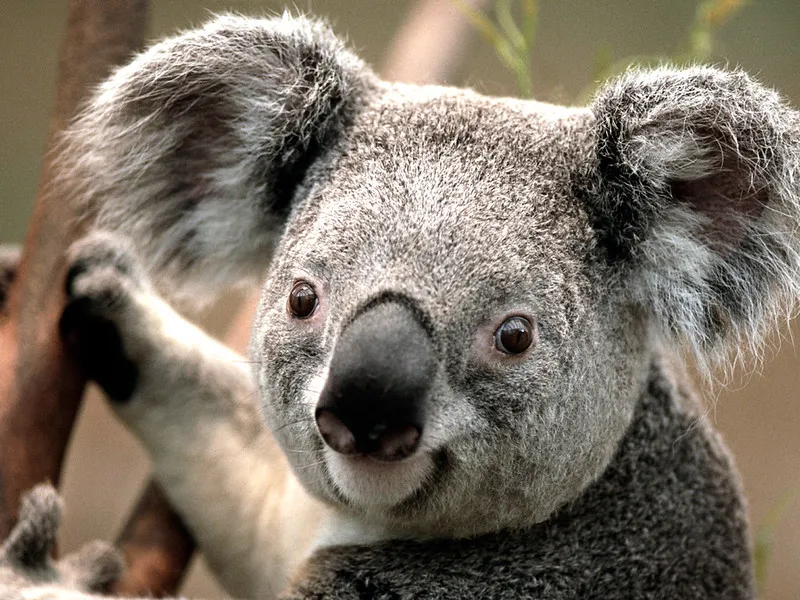
8. Koala — About 0.5 mph on the Ground
Koalas aren’t slow because they can’t move faster; they’re slow because movement costs energy they’d rather not spend. Eucalyptus leaves, their near-exclusive food source, are low in calories and mildly toxic, which has pushed koalas toward one of the slowest metabolisms of any mammal.
That trade-off shows up as an ambling ground speed of about half a mile per hour, paired with 18 to 20 hours of sleep or rest each day. A burst of real speed — koalas can sprint short distances when truly frightened — is reserved for emergencies, not daily business.
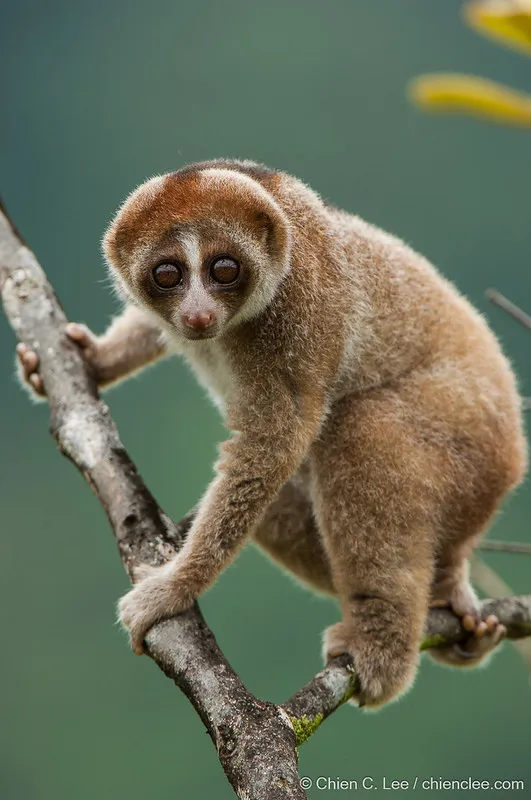
7. Slow Loris — About 0.3 mph
True to its name, the slow loris moves through the forest canopies of South and Southeast Asia at close to 0.3 mph. Every step is careful and deliberate, more like a controlled crawl than a walk.
That unhurried pace lets it creep up on insects and small prey without startling them, and it keeps the loris hidden from predators that key in on sudden movement. It’s also one of the only venomous mammals alive, secreting a toxin from glands near its elbows and mixing it with saliva — so slow doesn’t mean defenseless.
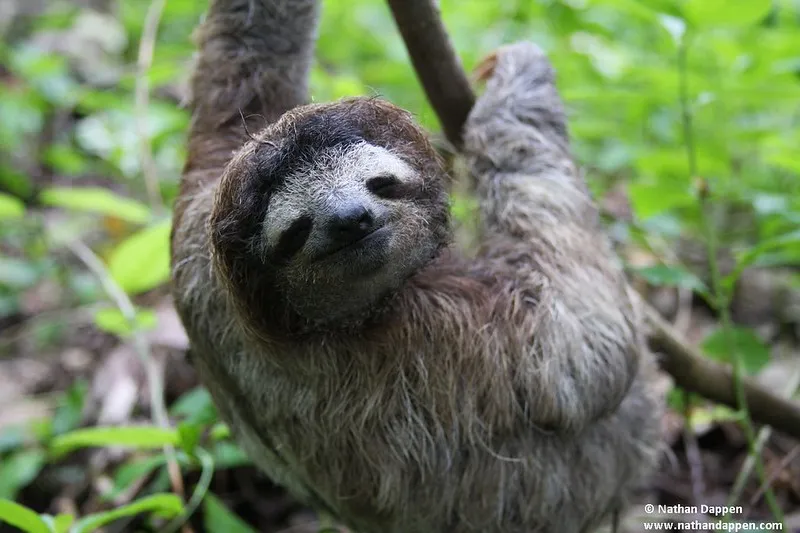
6. Three-Toed Sloth — About 0.15 mph
No animal is more synonymous with slowness than the three-toed sloth, and the reputation is earned. On the ground, it covers around 0.15 mph, a pace so sluggish that algae actually grows in its fur, giving many sloths a faint greenish tint.
That plodding speed comes down to biology: sloths run on an unusually low metabolic rate and a nutrient-poor diet of leaves, leaving little energy to spare. Oddly enough, they’re far better swimmers than walkers, moving about three times faster in water than they do on land.
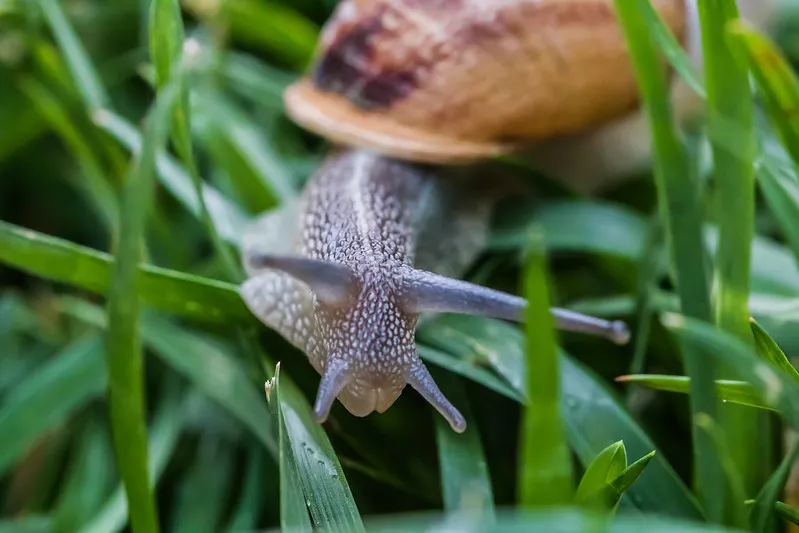
5. Garden Snail — About 0.03 mph
The garden snail earns its reputation honestly, gliding along at about 0.03 mph — roughly 50 yards an hour at a steady pace. It moves by rippling a single muscular foot in continuous waves.
That same foot lays down a trail of mucus that reduces friction, protects its soft body from rough surfaces, and even lets it grip and climb upside down. Slow as the method is, it’s kept snails around for hundreds of millions of years, largely unchanged.
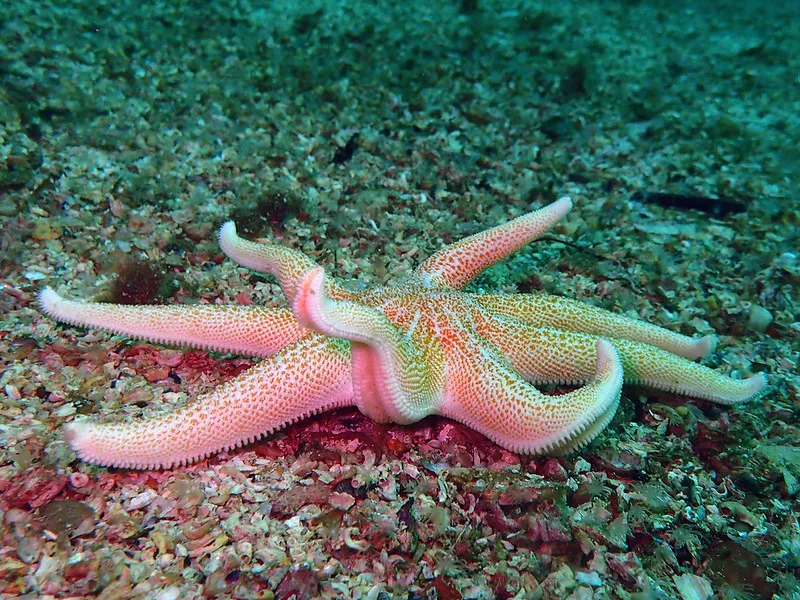
4. Starfish — About 0.02 mph
Starfish don’t have muscles built for speed, or even legs in the usual sense. Hundreds of tiny tube feet lined with suction cups pull them across the seafloor at roughly 0.02 mph, a pace closer to a slow drip than a walk.
Many species lean on ocean currents to cover real distance, saving their own effort for short adjustments and grabbing prey. What they lack in speed, they make up for in resilience — several can regenerate a lost arm, and some can regrow an entire body from a single detached limb.
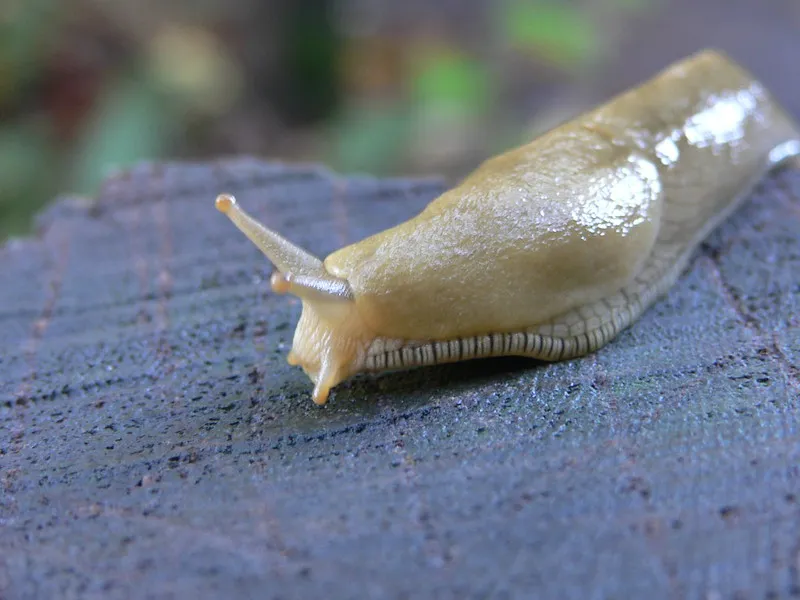
3. Banana Slug — About 0.007 mph
Banana slugs, common in the damp forests of the Pacific Northwest, cover about 6.5 inches a minute at top speed — close to 0.007 mph. Like their snail relatives, they glide along on a layer of self-produced mucus.
That mucus happens to be mildly numbing, an odd defense that discourages predators from taking a bite. Sluggish as they are, banana slugs play an outsized ecological role, breaking down fallen leaves and fungi and recycling nutrients back into the forest floor.
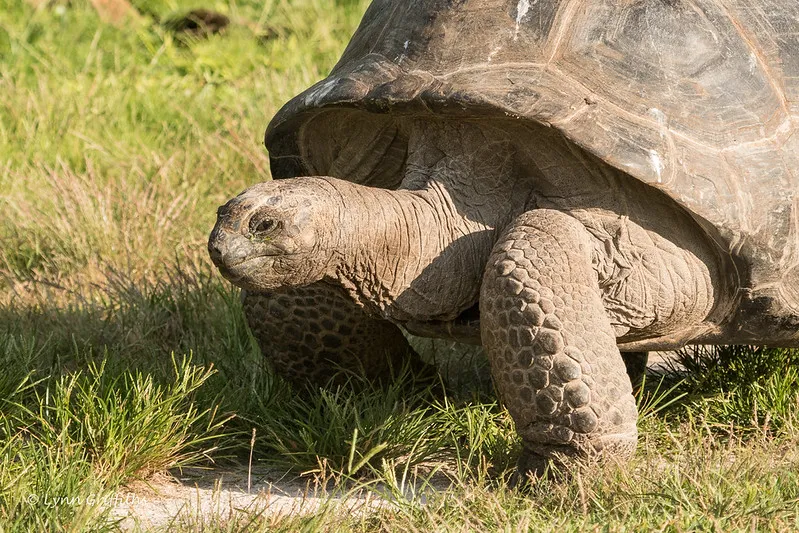
2. Giant Tortoise — About 0.17 mph
Giant tortoises, found on remote islands like the Seychelles and the Galápagos, plod along at about 0.17 mph. That’s fast enough to cover real ground over a full day, slow enough that a person could outwalk one without trying very hard.
Their size and heavily armored shells leave little need for speed, since few predators want to tackle a several-hundred-pound reptile encased in bone. The unhurried lifestyle seems to pay off — giant tortoises are among the longest-lived animals on the planet, with some individuals topping 150 years.
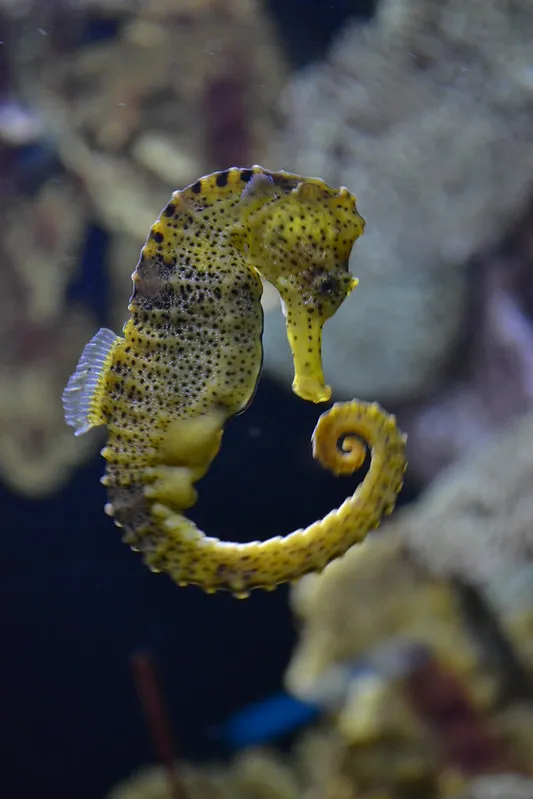
1. Seahorse — About 0.0017 mph
If there’s a single winner in the race to be the slowest, it’s the seahorse. Despite living in the open ocean, seahorses are remarkably poor swimmers, drifting at speeds sometimes estimated at under 9 feet per hour.
Rather than chasing speed, they anchor themselves to coral, seagrass, or other structures with a flexible, prehensile tail and let the current do the work instead. Their small dorsal fin flutters dozens of times a second just to inch forward, making the seahorse one of the least efficient swimmers in the entire ocean.
Frequently Asked Questions
Based on measured movement speed, the seahorse is often considered the slowest animal alive, with some species drifting at under 10 feet per hour. Garden snails and starfish are close behind, and the three-toed sloth usually takes the title of slowest land mammal — even though it’s actually faster than several animals on this list.
Sloths run on an unusually low metabolism paired with a low-calorie, leaf-based diet, leaving little spare energy for fast movement. Moving slowly also helps them avoid catching the attention of predators like eagles and jaguars, which are quick to notice sudden motion but often overlook something that barely moves at all.
No — a three-toed sloth actually moves faster. Sloths travel at about 0.15 mph on the ground, roughly five times the speed of a garden snail’s typical 0.03 mph, even though snails tend to get the “slowest” reputation in everyday conversation.
The American woodcock holds the Guinness World Record for slowest bird flight, cruising at around 5 mph during its courtship display without stalling out of the air. Most birds fly many times faster, which makes the woodcock’s display flight especially unusual to watch.
Seahorses are widely considered the slowest fish, and possibly the slowest swimmers of any marine animal, moving a tiny dorsal fin rapidly just to inch forward a few feet an hour. Their body shape simply isn’t built for speed the way a typical fish’s is.
Not as a universal rule, but the pattern shows up in a few notable cases. Giant tortoises regularly live past 100 years, and some researchers think their low-energy, unhurried lifestyle plays a role in that longevity, though diet and size matter too.
Yes. Starfish use hundreds of tiny tube feet on the underside of each arm to crawl across the seafloor, though at only about 0.02 mph, they also rely on ocean currents to cover longer distances they couldn’t manage alone.
Final Thoughts
Speed clearly isn’t a requirement for survival. Every animal on this list swapped a fast pace for something more useful to its own circumstances — energy conservation, camouflage, a low-calorie diet, or a life with nothing left to outrun. The seahorse might technically be the slowest of the bunch, but each of these ten animals proves that unhurried can still be a winning strategy.
Read: 5 letter animals that start with a, 10 Water animals found in drinking water

Ankurman Handique
Latest posts by Ankurman Handique (see all)
- Places to See Near Kaziranga National Park: Beyond the Jeep Safari - October 4, 2026
- Homestays in Kaziranga: 10 Best Places to Stay Near the Park - October 1, 2026
- 10 Slowest Animals in the World, Ranked From Slow to Slowest - September 26, 2026